Money Management: A Complete Guide to Managing Your Money Wisely

pointpride

Money management is one of the most important financial skills everyone should learn. Whether you are a salaried employee, business owner, freelancer, student, or self-employed professional, the way you manage your money can have a major impact on your financial future.

Earning more money is helpful, but earning a high income does not automatically create financial security. If expenses continuously increase with income, savings remain low, and debt keeps growing, even a large salary can disappear quickly.

Good money management is about making intentional decisions with the money you earn. It involves budgeting, saving, managing debt, investing, preparing for emergencies, protecting your income, and planning for future goals.

The good news is that you don’t need to be a financial expert to manage your money better. By following a few simple principles consistently, you can gradually build stronger financial habits.

1. Understand Your Financial Situation

The first step toward better money management is knowing where you currently stand.

Start by calculating your monthly income and expenses.

Write down all your sources of income, including:

  • Salary
  • Freelance income
  • Business income
  • Rental income
  • Interest income
  • Other regular income

Then list your expenses.

These may include:

  • Rent
  • Groceries
  • Electricity
  • Transportation
  • EMIs
  • Insurance
  • Education
  • Entertainment
  • Shopping
  • Subscriptions

This exercise can reveal whether you are spending more than you earn or whether you have room to increase your savings.

You cannot effectively manage money if you don’t know where it is going.

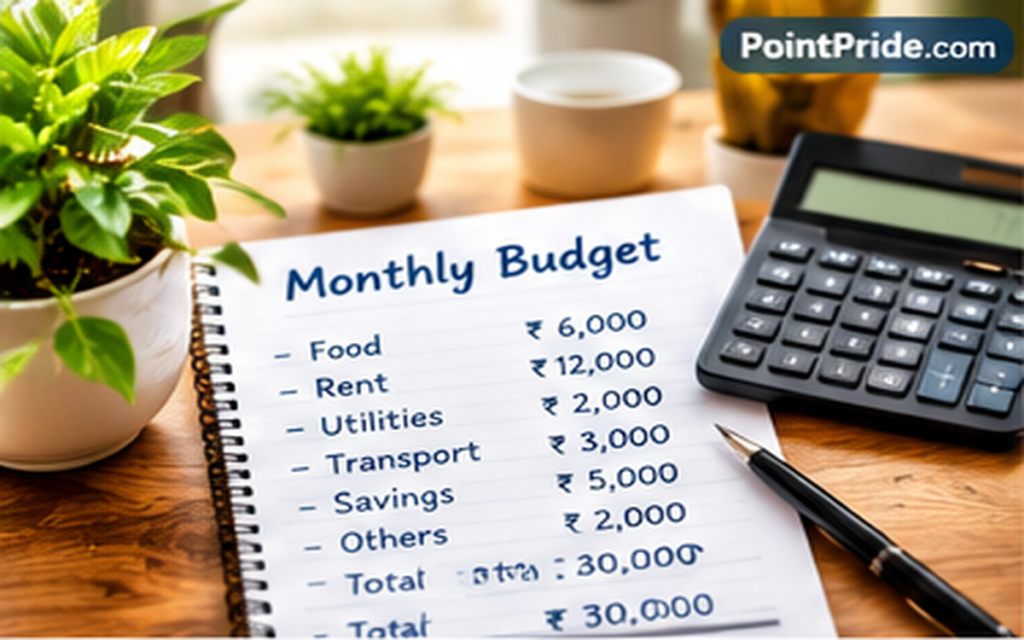
2. Create a Monthly Budget

A budget is a plan that tells your money where to go.

Without a budget, it is easy to spend money on small purchases throughout the month and discover later that your savings target has disappeared.

Start by dividing your income into major categories.

For example, if your monthly take-home income is ₹60,000, you might allocate:

Essential expenses: ₹30,000

Savings and investments: ₹12,000

Lifestyle expenses: ₹10,000

Emergency or short-term goals: ₹5,000

Miscellaneous expenses: ₹3,000

This is only an example. Your ideal budget depends on your income, location, family responsibilities, debt, and financial goals.

The important thing is to create a structure that you can realistically maintain.

3. Track Your Spending

Creating a budget is only the beginning.

Track your expenses throughout the month.

You can use:

  • A notebook
  • Spreadsheet
  • Mobile budgeting app
  • Bank statements
  • Credit-card statements

Don’t ignore small expenses.

A ₹150 food order may not seem significant. But if you make similar purchases several times each week, the monthly total can become substantial.

Tracking your spending helps identify patterns and gives you an opportunity to make better decisions.

4. Separate Needs From Wants

One of the most useful money-management habits is learning to distinguish between needs and wants.

Needs are expenses that are generally necessary, such as housing, basic food, transportation, utilities, and essential healthcare.

Wants are expenses that improve your lifestyle but may not be essential, such as expensive restaurants, entertainment, luxury shopping, and unnecessary upgrades.

This does not mean you should stop spending money on things you enjoy.

Instead, decide how much you can reasonably spend on wants without damaging your savings and financial goals.

A healthy financial plan should allow you to enjoy your present life while preparing for the future.

5. Build an Emergency Fund

Unexpected expenses can disrupt even a well-planned budget.

An emergency fund provides a financial cushion for situations such as:

  • Loss of income
  • Medical emergencies
  • Major repairs
  • Emergency travel
  • Unexpected family expenses

The amount you need depends on your personal circumstances.

Someone with a stable job and low expenses may have different requirements from someone with irregular income and several dependents.

Start with a manageable target and gradually build your emergency savings toward several months of essential expenses.

Keep emergency money in an accessible and relatively low-risk form rather than putting the entire amount into volatile investments.

pointpride

6. Control Your Debt

Debt is not always bad. Loans can help people purchase homes, fund education, or meet other important financial goals.

The main problem begins when debt becomes difficult to repay and manage.

High-interest debt can be particularly damaging because interest charges can consume a significant portion of your income.

Make a list of all your debts and record:

  • Outstanding balance
  • Interest rate
  • Monthly EMI
  • Remaining repayment period

Consider prioritizing expensive debt while continuing required payments on other loans.

Once a high-interest debt is cleared, redirect the money you were using for repayment toward savings or investments.

7. Use Credit Cards Carefully

Credit cards can be useful when managed responsibly, but they can also encourage overspending.

Avoid treating your credit limit as additional income.

Before using a credit card, ask yourself whether you could afford the purchase using your available cash.

Whenever practical, pay the full statement balance by the due date to avoid interest charges on carried balances under the card’s applicable terms.

Also monitor your credit utilization and avoid repeatedly using a large portion of your available limit.

Responsible credit-card management can support a healthier financial profile.

7. Use Credit Cards Carefully

Credit cards can be useful when managed responsibly, but they can also encourage overspending.
Avoid treating your credit limit as additional income.
Before using a credit card, ask yourself whether you could afford the purchase using your available cash.
Whenever practical, pay the full statement balance by the due date to avoid interest charges on carried balances under the card’s applicable terms.
Also monitor your credit utilization and avoid repeatedly using a large portion of your available limit.
Responsible credit-card management can support a healthier financial profile.

8. Make Saving Automatic

Saving becomes easier when it happens automatically.
Instead of waiting see how much money is left, decide on a savings amount in advance for future investment.
For example, if you receive ₹10,000 and want to save ₹2,000, arrange for the money to move into your savings or investment account soon after receiving your income.
This creates a simple habit:
Income → Savings → Expenses
rather than:
Income → Expenses → Whatever remains becomes savings

9. Invest for Long-Term Goals

Saving money protects your financial flexibility, but long-term goals may require investing.
its is totaly Depending on your objectives and risk managment tolerance, investment options can include:
• Mutual funds
• Index funds
• Stocks
• Bonds
• Fixed-income products
• Retirement-oriented investments
Each option has different levels of risk, liquidity, costs, and potential returns.
Do not choose an investment simply because someone claims it will provide high returns.
Understand the main product before investing and make sure it matches your time horizon and financial objectives.
Market-linked investments can lose value, and past performance does not guarantee future results.

10. Start Investing Early

Time can be one of the most valuable advantages in long-term investing.
Compounding occurs when investment it is important to see the return
For this reason, starting early can be beneficial even if your initial investment amount is relatively small.
For example, a young investor may begin with a modest monthly investment and increase it as their income grows.
The main goal is not to invest a huge amount immediately it is not so possible thing.
The goal is to develop a sustainable long-term habit.

11. Increase Your Savings When Your Income Rises

Salary increases and bonuses can provide opportunities to improve your financial position.
However, lifestyle inflation can consume the additional income.
Suppose your salary increases from ₹50,000 to ₹65,000.
Instead of spending the entire ₹15,000 increase, you could direct part of it toward investments, debt repayment, or an emergency fund.
You can still improve your lifestyle, but try to make sure that your financial progress also increases as your income grows.

POINTPRIDE

12. Plan for Major Financial Goal

Good money management requires more than controlling daily expenses.
Think about your major future goals.
These might include:
• Buying a house
• Purchasing a vehicle
• Children’s education
• Starting a business
• Retirement
• International travel
• Financial independence
Give each goal a target amount and timeline.
For example, if you want to accumulate ₹6 lakh over three years, you need to determine how much you need to save or invest regularly to work toward that target.
Breaking large goals into smaller monthly targets can make them easier to manage.

13. Protect Your Financial Future

Building wealth is only one part of financial planning thare are lots of thing in money managment.
You also need to protect yourself from events that could destroy your financial progress.
Depending on your circumstances, this may include appropriate:
• Health insurance
• Life insurance
• Emergency savings
• Disability or income protection where relevant
• Asset insurance
If your family depends on your income, financial protection becomes particularly important.
Insurance should primarily be evaluated for the protection it provides rather than simply as a tax-saving tool.

14. Avoid Impulse Purchases

Impulse spending can quietly damage your budget.
Before making a non-essential purchase, give yourself time to think is this really worth it to buy or not
For larger purchases, consider waiting a few days before making the final decision.
Ask:
Do I actually need this?
Can I afford it without reducing my savings?
Will I still want it next month?
Is there a less expensive alternative?
This simple pause can prevent many unnecessary purchases.

15. Review Your Finances Regularly

Your financial plan should evolve as your circumstances change.
Review your finances at least once or twice or three time in a year.
Look at:
• Income
• Expenses
• Savings
• Investments
• Debt
• Insurance
• Emergency fund
• Financial goals
• Net worth
If your salary increases, consider increasing your savings.
If your expenses increase, determine whether the additional costs are necessary.
If your financial goals change, adjust your investment and savings strategy accordingly.

A Simple Money Management Formula

There is no single formula that works for every  single household.

However, you can use the following structure as a starting point:

Earn → Budget → Save → Protect → Invest → Review

Earn

Focus on increasing your income through career development, skills, business, or additional legitimate income sources.

Budget

Give every major portion of your income a purpose.

Save

Build emergency savings and short-term funds.

Protect

Use appropriate insurance and maintain financial reserves.

Invest

Invest for long-term goals according to your risk profile.

Review

Regularly check whether your plan is working.

pointpride

Common Money Management Mistakes

Many financial problems are caused by repeated small mistakes rather than one major decision.

Some common mistakes include:

Spending More as Income Increases

A higher salary should ideally increase your savings capacity, not just your lifestyle.

Ignoring Small Expenses

Small recurring expenses can become significant over time.

Having No Emergency Fund

Without emergency savings, the unexpected expenses may force you to borrow money.

Investing Without Understanding Risk

Never invest simply because a friend, influencer, or salesperson recommends something.

Taking Unnecessary Debt

Borrowing money for non-essential purchases can create long-term financial pressure.

Delaying Retirement Planning

Waiting too long can make retirement savings more difficult to build.

Final Thoughts

Good money management is not about becoming extremely strict with every rupee you spend.

It is about making deliberate financial decisions.

Start by understanding your income and expenses. Create a realistic monthly budget, track your spending, separate needs from wants, build an emergency fund, manage debt carefully, and make saving automatic.

Once your financial foundation is stronger, consider investing for long-term goals based on your risk tolerance and investment horizon.

Remember that financial success is usually the result of consistent habits rather than one extraordinary decision.

You don’t have to completely change your financial life overnight.

Start with one improvement today. Track your expenses, save a little more, reduce unnecessary debt, or begin planning for an important financial goal.

Small financial decisions repeated consistently can eventually make a meaningful difference to your financial future.

Leave a Comment

Your email address will not be published. Required fields are marked *

Scroll to Top